Korea Summit Week Stocks (Nov 16–19, 2026): Hanwha Ocean (042660.KS), KONA I (052400.KQ) and KAI Wait on Seven Political Decisions
On October 14, 2025, China’s Commerce Ministry announced countermeasures that barred Chinese companies and individuals from dealing with five US subsidiaries of Hanwha Ocean. One of the five was Hanwha Philly Shipyard, which runs the shipyard in Philadelphia, and the stated reason was that the companies had cooperated with the US Trade Representative’s investigation into China’s shipbuilding industry. The KOSPI fell only 0.6% that day, but Hanwha Ocean’s shares dropped 5.8%. Two weeks later, on October 30, President Trump and President Xi Jinping met in Busan and agreed to put each other’s retaliation on hold for a year, and on November 10 China’s Commerce Ministry issued Order No. 7 suspending the sanctions for one year. On November 9, 2026, one day before that year ran out, China extended the suspension by two more months. The new deadline is January 10, 2027. However well the company builds ships, a negotiation between two heads of state decided whom it could do business with and what its shares were worth.
This week President Lee Jae-myung leaves for Manila on Monday, November 16, for the ASEAN-related summits, and on November 18–19 he attends the APEC leaders’ meeting in Shenzhen, China. On the same Monday the budget committee of Korea’s National Assembly opens its adjustment subcommittee, which cuts and adds line items in the government’s KRW 820.9tn (about $615bn) budget for 2027. So at the tables where the president and the National Assembly sit this week, which country’s political decision would close which deal, and which Korean stock would earn money from it? This report looks at each negotiating party in three steps: its political situation, the political decision a deal still needs (who makes it, through what procedure and when), and the Korean stocks the money reaches once that decision is made.

This report is the English edition of the author’s Korean note on the stocks that could benefit from Korea’s summit week and the 2027 budget talks.
As of: November 15, 2026. Share prices and market caps are Korea Exchange (KRX) closes on Friday, November 13. Event studies use Naver Finance adjusted daily closes against the KOSPI or KOSDAQ. Exchange rates are Yahoo Finance quotes on November 13: KRW 1,333.78 per dollar and KRW 39.37 per Thai baht. Political, deal and budget facts come from government and parliament releases and press reports, each checked in the original and listed under Sources.
Stocks covered: Hanwha Ocean (042660.KS), KONA I (052400.KQ), Korea Aerospace Industries (KAI, 047810.KS), HD Hyundai Heavy Industries (329180.KS), Hotel Shilla (008770.KS), Hanatour Service (039130.KS), Doosan Enerbility (034020.KS) and Korea Electric Power (KEPCO, 015760.KS), with GKL (114090.KS), Lotte Tour Development (032350.KS) and Paradise (034230.KQ) discussed for comparison.
Some Korea-specific background. The KOSPI is the main board of the Korea Exchange and its benchmark index; the KOSDAQ is its growth-company board. Tickers ending in .KS trade on the KOSPI and .KQ on the KOSDAQ. Korean amounts are written here as KRW bn (one Korean unit of 억원 is KRW 100mn) and KRW tn. An excess return is a stock’s move minus the move of its market index over the same days, in percentage points (pp): a stock that rose 1% on a day the KOSPI fell 2% has an excess return of +3pp.
The author holds none of the stocks in this report.
Topics covered: the seven negotiating tables of the week and the official agenda; Thailand (a landslide prime minister and the navy’s signature); the Philippines (a congressional budget tied up by a Supreme Court ruling); Indonesia (a vice-president’s resignation and loan approval); Vietnam (a party chief who is also head of state, and the Politburo); the United States (a president who lost Congress, and Section 301); China (the truce extension and the year-end visa-free deadline); Korea’s National Assembly (a majority, automatic referral, local currency vouchers and defense); how stocks moved on past decision days; the order in which decisions arrive; situations and dates; calculation notes.
1. Seven tables this week, and no money deal on the official agenda
The president and the National Assembly sit at seven negotiating tables this week. In Manila there are Thailand and the Philippines, which hold separate summits with Korea, and Indonesia and Vietnam, which Korea meets in the conference hall. In Shenzhen there are President Trump’s United States and President Xi’s China. At home the ruling and opposition parties face each other over the budget in the National Assembly. The official agenda announced by the presidential office mentions neither weapons nor nuclear plants. So the decisions with money attached this week are not on the conference agenda; they sit in each country’s domestic politics, which must put the last stamp on deals that are already under way.
The official agenda: AI, culture, minerals and crisis response
National Security Adviser Wi Sung-lac laid out the schedule in a briefing on November 12. At the Korea–ASEAN summit on the 16th, Korea will review progress on the comprehensive strategic partnership vision it presented in Kuala Lumpur last year and propose cooperation in AI and the cultural and creative industries. At the Korea–Mekong summit the same day, the leaders will discuss critical minerals and transnational crime. On the 17th, the ASEAN Plus Three summit covers food and energy crises, and at the East Asia Summit (EAS), which President Lee attends for the first time since taking office, he will speak about online scams and his plan for peaceful coexistence on the Korean Peninsula. On the 18th he moves to Shenzhen for the APEC CEO Summit and a welcome dinner hosted by President Xi and his wife, and at the plenary on the 19th he will call for a response to the energy supply shock from the Middle East and a return to a multilateral trade order. Nuclear power, defense and free trade agreements were not in the briefing.
Senior presidential spokesperson Kang Yu-jung said in a written briefing on the 13th that the president will hold separate summits in Manila on the afternoon of the 16th with Thai Prime Minister Anutin Charnvirakul and Philippine President Ferdinand Marcos Jr. These are the only two bilateral meetings confirmed for the trip. A Korea–China summit is “being coordinated in detail,” and reports said a formal Korea–US meeting is unlikely because the two presidents met at the UN General Assembly two months ago. Talks to upgrade the Korea–ASEAN free trade agreement have gone through two rounds with a target of substantial conclusion by the end of 2027, so nothing will be finished there this week.
The money is in deals under way and decisions with deadlines
The absence of deals from the agenda does not mean no money is at stake. With Thailand there is the main contract for a frigate on which Hanwha Ocean is the preferred bidder. With the Philippines there are HD Hyundai Heavy Industries’ follow-on warships and KAI’s place among the fighter candidates. With Indonesia there is KAI’s export of the KF-21 Boramae fighter, and with Vietnam the second reactor of the Ninh Thuan nuclear project. In Shenzhen there is the suspension of sanctions on Hanwha Ocean’s US subsidiaries, which is tied to the US–China truce and runs to January 10, 2027, and Korea’s visa-free entry for Chinese tour groups, which ends at year-end. In the National Assembly, budgets for local currency vouchers, defense and a chip cluster are on the subcommittee’s list of cuts.
What these deals have in common is that they do not close because the Korean government wants them to. The other country’s navy has to sign, its congress has to pass a budget, its finance ministry has to approve a foreign loan, its Communist Party Politburo has to choose a partner, or the US Trade Representative and China’s Commerce Ministry have to extend their suspensions on the same date. The chart below puts the political decision still pending at each of the seven tables on a timeline. It shows at a glance which stamps could come this week and which will slip into next year because of the other side’s calendar.

As the chart shows, the nearest decisions are Thailand’s main contract and the Korean National Assembly’s budget, and in both the political judgment has already been made and only procedure remains. The US–China truce extension and the visa-free extension come next. The Philippines, Indonesia and Vietnam are next year’s business, since they need the other country’s budget signature, loan approval or Politburo decision first. The money comes not from the official agenda but from the last stamp of the other side’s politics. The following chapters start with the nearest one, Thailand.
2. Thailand: politics has already decided, and only the navy’s signature is left
Of the seven tables, Thailand is the one where the most political decisions are already done. A prime minister who won a landslide has signed the selection papers, and the defense ministry has approved them. What remains is for the navy and Hanwha Ocean to agree on specifications and terms and sign the main contract. That makes the Thai frigate the deal most likely to produce the first company filing after this week’s Manila summit.
From caretaker to landslide prime minister
Anutin Charnvirakul became prime minister in September 2025 as leader of the Bhumjaithai Party. It was a stopgap government, backed by the then main opposition People’s Party on condition that the House be dissolved within four months. He dissolved the House in December 2025 during the border dispute with Cambodia, and in the election of February 8, 2026 Bhumjaithai won a surprise landslide. Al Jazeera reported the day after the count that the party looked set to win at least 194 of the 500 House seats. On March 19, just before the House vote, Anutin announced a coalition of 16 parties and was elected prime minister again. The People’s Party, the second-largest, stays in opposition, but the coalition’s majority is so large that it has little power to block the government’s defense decisions.
What pushed the government toward defense was the border fighting with Cambodia in July 2025. About a week after the ceasefire, the Thai government approved the purchase of four Swedish Gripen fighters (about $600mn), and in December it added a little over THB 5bn to the military’s reserve budget. Even so, the defense budget for fiscal 2027 (which began in October 2026) is THB 203.4bn, 0.47% less than the year before. The government is clearly willing to spend on defense, but its finances are not loose enough to start many new programs at once.
The selection is done; the main contract and a House committee’s questions remain
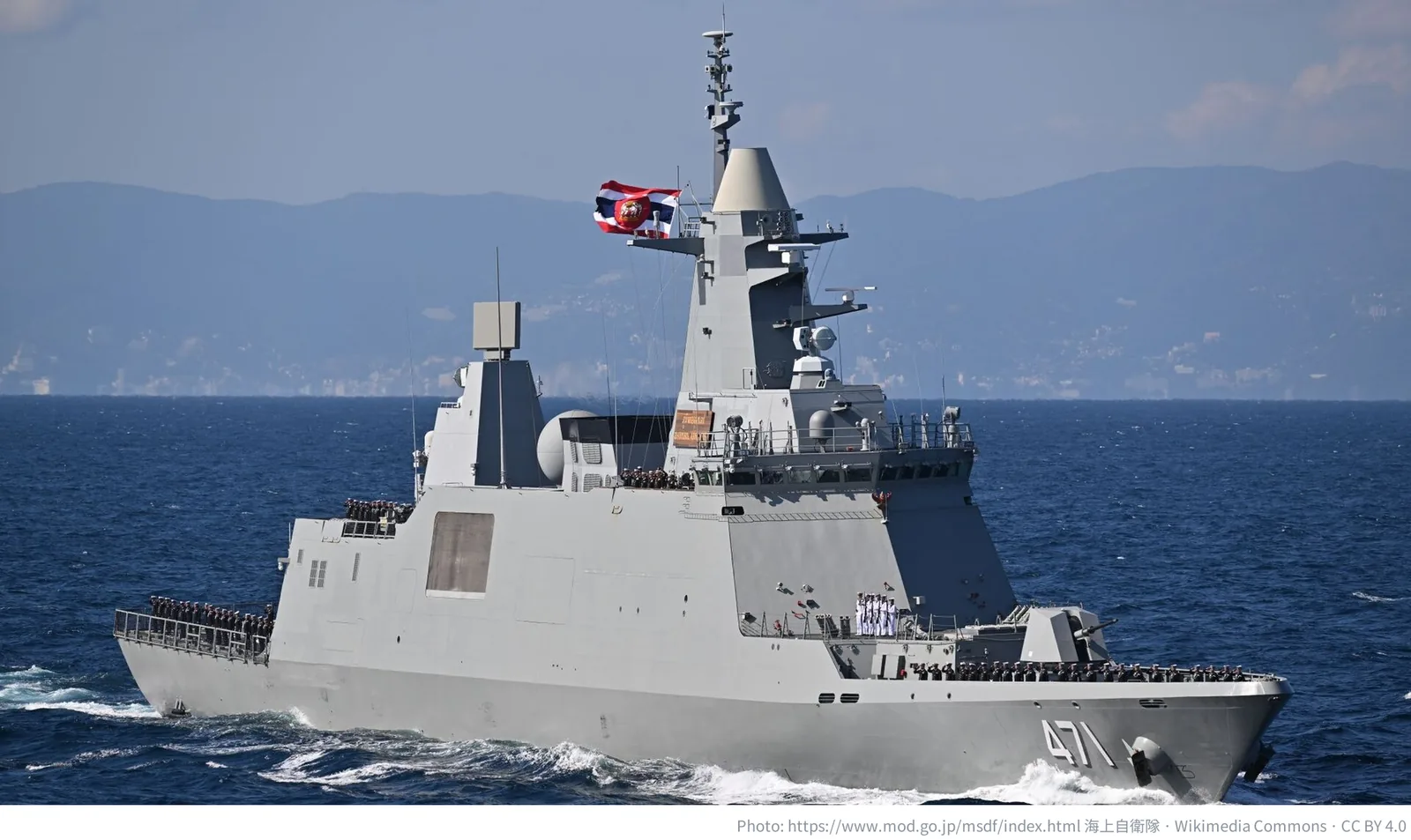
In September 2026 the Royal Thai Navy picked Hanwha Ocean as preferred bidder for one 4,000-ton frigate plus an integrated logistics support program, worth THB 16.73bn. Khaosod English reported on September 18 that the navy said it had chosen Hanwha Ocean “transparently and in line with relevant regulations.” The steps ran as follows: the prime minister signed the selection summary on September 4, the defense ministry’s permanent secretary approved it on September 7, the procurement committee chair announced it on September 8, and the objection period ended on September 18. The cabinet had already approved a multi-year budget of THB 35bn for two ships on August 5, 2025, and one of them was put into the fiscal 2026 budget.

The remaining step is for the navy and Hanwha Ocean to settle specifications, contract terms and offsets (investment and technology transfer) and sign the main contract. According to Thai reports, the offset clause is written separately from the construction contract, and payment is tied to meeting the offsets. As of a Korea Times report on October 27, Hanwha Ocean was still the preferred bidder, and the company said it would file a disclosure once the main contract is signed.
The variable is the House military affairs committee. At a hearing on September 10 the committee took up the fact that the close-in weapon system (Phalanx) on HTMS Bhumibol Adulyadej, a Thai navy frigate that Korea built earlier, had not worked since November 2019. It said that without an explanation within 14 days it would refer the matter to the State Audit Office and others and hold back the warranty payment. The navy’s position is that the US maker of the equipment is responsible, and it said it would resolve the issue within the contract negotiations. A standing committee has no power to block a contract, but an audit could delay the signing.
Hanwha Ocean: about 5% of market cap, with follow-on ships from fiscal 2028
The contract value of THB 16.73bn was about KRW 683.3bn (about $510mn) at the exchange rate when the selection was made, and KRW 658.7bn at the November 13 rate of KRW 39.37 per baht. That is 4.6% of Hanwha Ocean’s market cap of KRW 14.82tn (about $11.1bn); the company’s shares closed at KRW 48,350 (about $36.3) on November 13. Reports mention up to about KRW 4tn if three follow-on ships are included, but the company called that “at the planning stage,” and the budget for the second ship was dropped from fiscal 2027 and pushed to fiscal 2028. So what could be confirmed now is the first ship.

In short, Thailand’s decision has already left the hands of politicians and sits at the navy’s paperwork stage. If this week’s Manila summit mentions a signing date, or if news comes that the House committee’s questions have been settled, the main contract filing moves closer. The Philippines is the opposite case: it has an even stronger reason to build up its navy, but the congressional path that money must travel has narrowed.
3. The Philippines: the sea is urgent, but Congress’s wallet is tied
The Philippines has bought Korean weapons more steadily than any other country, and tension in the South China Sea gives it more reason than ever to expand its navy. But new warship contracts depend not on this week’s summit but on whether the Philippine Congress passes the 2027 budget at year-end. And that Congress now finds it hard to raise defense spending freely because of a Supreme Court ruling and a corruption scandal.
A one-term president, an impeachment trial and four Senate presidents
President Marcos’s term ends in June 2028 and he cannot run again. For the remaining year and a half he is locked in a fight with his rival, Vice President Sara Duterte. The House impeached her in May 2026, and the Senate trial began in July. On October 13 the prosecution dropped three of the four articles, leaving a single allegation of PHP 818mn in unexplained wealth, and a conviction needs 16 of the 24 senators. The Senate has changed its president four times in less than a year since September 2025, when its president stepped down over links to the flood-control budget scandal, and Senator Gatchalian became Senate president in June 2026.
The defense need is clear. Even in the week of the ASEAN meetings in Manila in July 2026, the China Coast Guard fired water cannon at Philippine vessels at Scarborough Shoal on two straight days, and at Second Thomas Shoal Philippine sailors were struck with batons. As ASEAN chair this year, the Philippines set the goal of concluding a South China Sea code of conduct within the year. By DS Investment & Securities’ count, 42% of Philippine arms imports in 2021–2025 came from Korea.

The Supreme Court tied Congress’s hands
The problem is the path the money takes. After a Senate investigation found 673 ghost projects among flood-control works in 2016–2025, with estimated losses of about $3bn, the Philippine Supreme Court ruled in October 2026 that the 2024 and 2025 budget laws were unconstitutional. The Daily Tribune reported that the court found the two budgets “grossly distorted,” citing Congress’s additions to the president’s proposal: PHP 449.5bn of unprogrammed appropriations, money for projects not yet defined, and PHP 17.99bn for a road fund. Senators promised tighter safeguards in reviewing the 2027 budget.
The ruling bears directly on the defense budget. On October 13 the House passed the PHP 7.2tn 2027 budget by 281 to 13, and the Senate floor, a bicameral conference committee and the president’s signature remain. The president’s proposal includes PHP 50bn for military modernization, while the defense department said it needs at least PHP 70bn. Senate finance committee chair Ejercito said he would raise it to PHP 70bn or more “if we can.” But since Congress enlarging the president’s proposal was the reason for the court’s ruling, any increase can only come by cutting other items to make room.

The decisions needed: budget signature, multi-year contracting authority, contract
Three decisions stand between now and a new warship contract. First, the president has to sign the 2027 budget after the bicameral conference at year-end. Last year the Senate finished its third reading on December 9 and the conference met on December 11–13. Second, the Department of Budget and Management has to grant multi-year contracting authority (MYCA), which lets the government pay over several years. Third, the defense department approves the project and signs. During President Lee’s state visit in March 2026 the two countries amended their implementing arrangement on defense procurement to widen the range of Korean companies that can sign negotiated contracts with the Philippine defense department without a tender, and to extend cooperation to maintenance and follow-on logistics. Once the budget passes, the road for Korean companies to negotiate without competitive bidding is already paved. The US is also providing up to $500mn a year in Foreign Military Financing (FMF) for 2026–2030.

HD Hyundai Heavy first, KAI and submarines later
HD Hyundai Heavy Industries has won 12 Philippine navy ships since 2016 and delivered six, and in December 2025 it signed for two 3,200-ton frigates worth KRW 844.7bn (about $633mn), 3.0% of its market cap of KRW 28.44tn (about $21.3bn). At its results in August the company said it saw more order opportunities in the fourth quarter. A follow-on contract of the same size would be a similar share of market cap. KAI has already won an order for 12 more FA-50PH light fighters (about $700mn, June 2025), and in the multirole fighter program the KF-21 Boramae is a candidate alongside the F-16V, Gripen, Rafale and Eurofighter. Defense Secretary Teodoro said again in July that “securing the budget comes first.” The two submarines (about KRW 1.5tn to 2tn) have not even reached a request for proposals. KAI has also built up work that follows a fighter sale. Reports say that in December 2025 it signed an upgrade of the existing 11 FA-50PH jets for about KRW 93bn, and in early 2026 a three-year performance-based logistics contract for KRW 101.4bn. If the Philippine air force picks the Boramae, maintenance and upgrade work of this kind runs for decades, so funding the multirole fighter program would open a stream of money for KAI longer than the price of the jets.
Nuclear power has the same structure. The energy secretary said in October that a study by Korea Hydro & Nuclear Power found it possible to build a new plant at the old Bataan site, but the options are restarting, replacing or selling it, and the nuclear regulator (PhilATOM) does not yet have its implementing rules or senior staff. A decision that brings money to a Korean listed company is unlikely within Marcos’s term.
The key to the Philippine deals is the Philippine Congress’s budget signature in December. After that, the first deal that can move is HD Hyundai Heavy’s follow-on warships, for which the negotiated-contract road is already paved. By size, the biggest deal is in Indonesia.
4. Indonesia: the order is the biggest, but the president is shaken
Indonesia has said it will buy 16 KF-21 Boramae fighters from KAI, and as many as 48. The 16 alone are worth 38% of KAI’s market cap. But the main contract needs the finance ministry’s approval of a foreign loan and the consent of the parliament’s defense committee, and the president who has to make those decisions is weakened by falling approval ratings and the resignation of his vice-president.
An approval rating halved in a year, and a vice-president gone
President Prabowo Subianto’s approval rating in Saiful Mujani Research and Consulting (SMRC) surveys fell from 81.2% in November 2025 to 66.4% in March 2026, 51.1% in July and 44.5% in October. The Jakarta Post attributed the fall to worsening views of the economy, politics and law enforcement. On November 11 Vice President Gibran Rakabuming Raka, the son of former President Joko Widodo, resigned after a dispute over his eligibility to run. Reuters reported that the resignation came on the day about 120 lawmakers filed an impeachment petition, and that it could break the political alliance between Prabowo and Jokowi. The People’s Consultative Assembly must choose a new vice-president from the president’s nominees within 60 days.

Money is tight too. The 2025 fiscal deficit was 2.92% of GDP, close to the legal ceiling of 3%, and the government has set a 2027 target of 2.4%. On September 14 Prabowo replaced Finance Minister Purbaya with deputy minister Suahasil Nazara, the third finance minister in less than two years. The same defense budget already has to pay for 42 French Rafales and 48 Turkish KAAN fighters, and in October the deputy chair of the parliament’s defense committee backed a plan to bring in Chinese J-10s.
The method is settled; the money is not
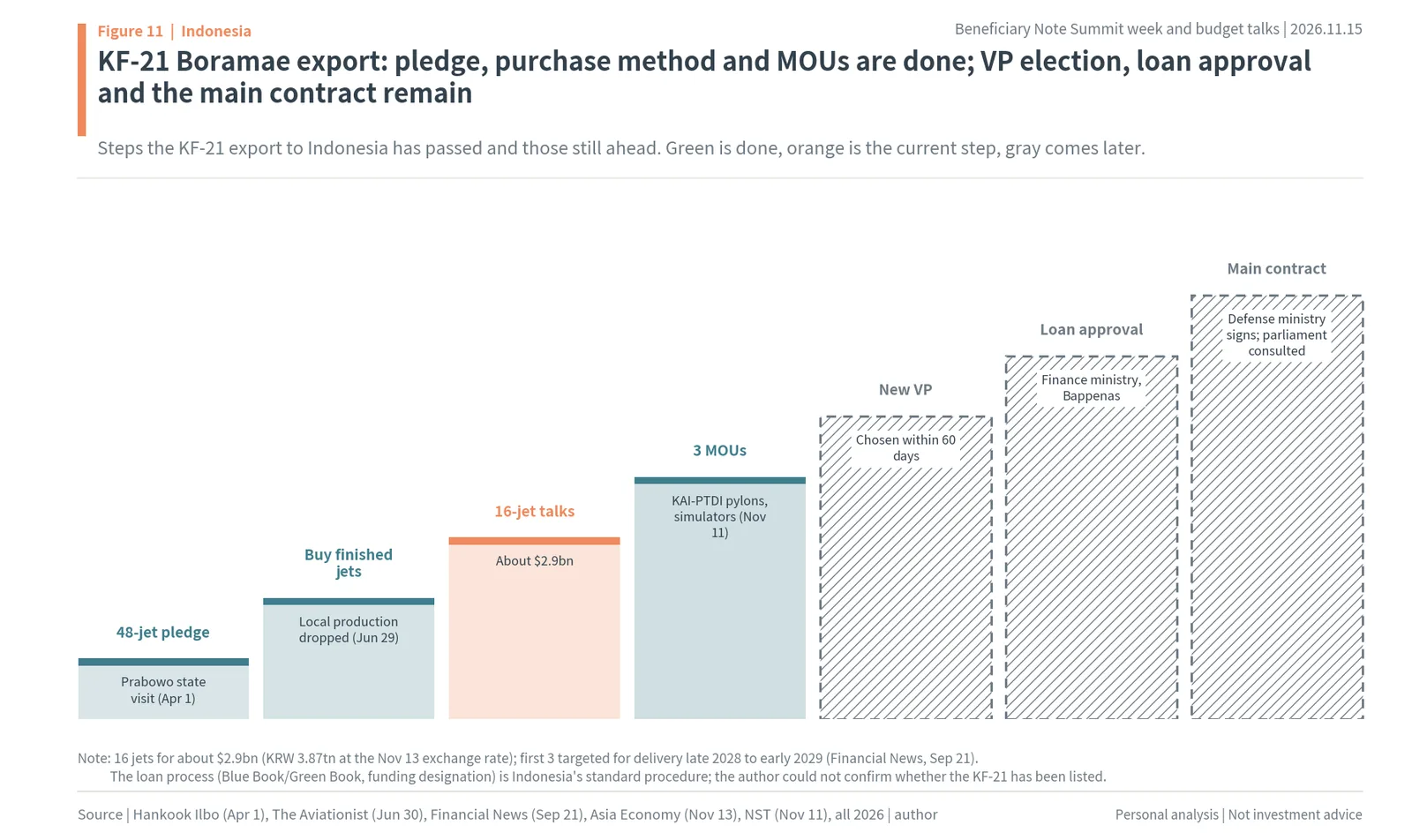
The Boramae program moved twice this year. During Prabowo’s state visit to Korea from March 31 to April 2 the two countries raised their ties to a “special comprehensive strategic partnership” and Indonesia pledged to buy 48 jets, but that was not a binding contract. On June 29 Indonesia dropped its plan for joint local production and decided to buy finished jets made in Korea. It also paid off KRW 600bn in overdue development contributions. According to September reports, 16 jets cost about $2.9bn (KRW 3.87tn at the November 13 rate), with the first three due for delivery between late 2028 and early 2029.

At the 12th Korea–Indonesia Defense Industry Cooperation Committee in Jakarta on November 11, KAI and Indonesia’s state aircraft maker PTDI signed three memorandums of understanding: PTDI will make and supply three types of weapon pylons locally for later production batches, the two will develop simulators together, and they will share market information on mid-size civil aircraft. Foreign media read these as statements of intent, not contracts.
Air defense is in the same queue. In May and June Indonesia sent LIG D&A a letter of intent to buy two batteries of the Cheongung-II (KM-SAM) system, conditional on financing and as a package with maintenance and training. The 2026 defense budget is IDR 337tn, and when the rupiah fell to a record low, academics even proposed cutting new contracts. Fighters and air defense stand in the same loan-approval line.
Three decisions remain before a KF-21 contract: the defense ministry’s signature, the approval of foreign borrowing by the finance ministry and the national development planning ministry (placing the project in the Blue Book and Green Book and assigning a funding source), and budget consultations with the parliament’s defense committee. With the vice-presidency empty, a new finance minister and a shrinking deficit target all at once, these steps are unlikely to finish this year.
KAI: the most money at stake and the longest wait
The KRW 3.87tn for 16 jets is 38.1% of KAI’s market cap of KRW 10.16tn (about $7.6bn), and 48 jets would be 114%, more than the whole company. Of the seven tables this is the largest deal relative to company size. KAI’s shares closed at KRW 104,200 (about $78.1) on November 13, 48.4% below their 52-week high. In the past KAI reacted strongly to Indonesia’s political decisions. On the day of Prabowo’s visit it beat the KOSPI by 5.6pp, and by 8.2pp over two days, and in the five days after Indonesia switched to buying finished jets it beat the index by 19.1pp (Chapter 9).
The key to Indonesia is not this week’s Manila hall but the choice of a new vice-president and the finance ministry’s loan approval. For KAI, Indonesia is a story for the first half of next year rather than this week. Vietnam, by contrast, is a country where the decision rests with one man.
5. Vietnam: a Politburo led by one man picks the partner for the second reactor
Korea meets Vietnam this week only at the Korea–Mekong summit, but the largest single deal for Korea, the second reactor of the Ninh Thuan nuclear project, is at stake. The decision structure is simple. The Communist Party Politburo picks the partner, and at its top is To Lam, who is both general secretary and state president. The key is less what is said in the hall than the financing terms Korea puts on the table.
One man at the top of party and state
To Lam was re-elected general secretary at the 14th Communist Party Congress in January 2026, and on April 7 the National Assembly elected him state president for 2026–2031 with all 495 votes. The same day former central bank governor Le Minh Hung became prime minister. With one man holding the top posts of both party and state, decisions on large national projects can move faster.
The nuclear project was scrapped in 2016 over its cost and revived ten years later. Vietnam signed an intergovernmental agreement with Russia for the first reactor in March, and Japan dropped out of the second reactor in January 2026. On August 24 the National Assembly passed a resolution splitting Ninh Thuan into three projects: the first reactor, the second reactor, and land compensation and resettlement. The Hankook Ilbo reported that the point was to give them separate legal status so that the first reactor with Russia would not be held back by talks on the second, which has no partner yet.
The Politburo’s judgment and the financing terms decide the partner
Korea, France and China are competing for the second reactor. In a September report from Hanoi, the Financial News said Vietnam set conditions of financing at under 3% a year, up to 60% localization and transfer of core technology, and quoted an industry official: “The political judgment of the Vietnamese Communist Party Politburo, which holds final approval, is the key variable.” Talks with France took shape after To Lam’s visit to France, and China competes on price and localization. During President Lee’s state visit on April 22, KEPCO and PetroVietnam signed an agreement to study nuclear cooperation, and the Export-Import Bank of Korea, the Korea Trade Insurance Corporation and KEPCO signed a financing memorandum. Teaming up with the Emirates Nuclear Energy Corporation is also under review.

Reported project costs range from KRW 13tn to 18tn. Even the low end of KRW 13tn (about $9.75bn) is 43.3% of Doosan Enerbility’s market cap of KRW 30.01tn (about $22.5bn), but the money would be shared by KEPCO, Korea Hydro & Nuclear Power, Doosan Enerbility, Daewoo E&C and Hyundai E&C. On the day of the state visit these stocks moved roughly with the KOSPI, and in the five days after they split: Doosan Enerbility +7.2pp, Daewoo E&C +9.1pp and KEPCO −8.2pp (Chapter 9). The money from a nuclear order is divided among companies only after the contract and financing terms are fixed.
Malaysia follows the same pattern. Prime Minister Anwar’s coalition has held despite internal strife in September, and the 2027 defense budget is MYR 22.11bn. A medium-range air defense system (MERAD) was approved in the 13th Malaysia Plan, but the supplier has not been chosen. LIG D&A’s Cheongung-II competes with Turkish and Chinese systems, and the company already won a $94mn Haegung contract in April. No bilateral meeting with Malaysia has been announced for this week.
For Vietnam’s reactor, the key is the Politburo’s judgment and the financing Korea offers, not this week’s meeting. For KEPCO and Doosan Enerbility it is next year’s story. Moving on to Shenzhen, the American president’s position changed sharply in this month’s election.
6. The United States: a president who lost Congress still holds Section 301 and wants deals
In Shenzhen, President Trump meets President Xi as a president who has lost Congress. Even so, the US decision paired with the Hanwha Ocean sanctions still rests with him. Delaying or extending the shipbuilding and shipping measures is decided by the US Trade Representative on the president’s instruction, without congressional approval. The industry expects that decision to come as another short extension.
A Democratic Congress, a president with a veto
In the midterm elections of November 3 the Democrats took both the House and the Senate. NPR, citing the AP count, reported that Democrats regained full control of Congress for the first time since 2023, with at least 228 House seats and 54 Senate seats as of November 4. The new Congress convenes in January 2027. The same report noted that “Trump has the veto,” so bills passed by Congress still need the president’s support to become law. For a president who will find it hard to do big things through legislation in his last two years, trade measures that do not need Congress and deals with foreign leaders are among the few ways left to show results.
The legal basis for tariffs moved to Section 301
The legal basis for tariffs also changed this year. On February 20 the Supreme Court ruled 6 to 3 that the International Emergency Economic Powers Act (IEEPA) does not give the president tariff power. The administration imposed a 150-day 10% tariff under Section 122 of the Trade Act the same day, and one day before that tariff expired on July 24, the Trade Representative finalized Section 301 tariffs of 10–12.5% on grounds of “forced labor.” Section 301 and Section 232 tariffs were not affected by the ruling. Whichever party holds the majority in Congress, these provisions are changed by executive action on the president’s instruction and published in the Federal Register.

The Section 301 measures aimed at China’s shipbuilding industry (port fees on China-linked vessels and tariffs on port cranes) work the same way. According to Holland & Knight, the Trade Representative published a final decision extending the suspension of these measures by two more months, from November 9 to 11:59 p.m. US Eastern Time on January 9, 2027. About 60 comments were filed, some asking for a permanent suspension. There was no formal proposal to withdraw them. The industry expects another extension of two or three months in January. Trump and Xi are due to meet again at the G20 in Miami on December 14–15, and some expect a bigger deal to wait until then.

Hanwha Ocean: the US suspension and the Chinese suspension share a date
China’s sanctions on Hanwha Ocean’s US subsidiaries were imposed precisely because they cooperated with this Section 301 investigation, and China’s Commerce Ministry has paused and extended them to match the US suspension dates. So if the Trade Representative extends its suspension past January 9, China’s suspension is likely to be extended with it, and if the US withdraws the Section 301 measures altogether, China gains a reason to lift the sanctions. Hanwha Philly Shipyard plans to grow its workforce to 7,000–7,500 within five years, and there is concern that US funding for MASGA (Make American Shipbuilding Great Again, the Korea–US shipbuilding cooperation) could be delayed in a Democratic Congress. There is also a view that rebuilding shipbuilding is a bipartisan security matter. In July 2026 a Korea–US shipbuilding cooperation center opened to support MASGA, and in October a Republican US senator visited Hanwha Ocean’s shipyard in Geoje.
In short, the US decision still rests with the president, and a president who has lost Congress has more reason to want deals, not less. Still, the industry expects another short extension in January. Paired with this decision are China’s sanctions on Hanwha Ocean, and China has one more deadline that reaches Korean stocks.
7. China: the truce extension is this week, but the real day for tourism is the year-end visa-free deadline
On the Chinese side there are two deadlines that reach Korean stocks. One is the suspension of sanctions on Hanwha Ocean’s US subsidiaries, which ends on January 10, 2027 and moves together with any truce extension at the US–China summit in Shenzhen. The other is the visa-free program for Chinese tour groups, which ends on December 31, and that decision belongs to the Korean government, not China. The real day for tourism stocks is not the summit but the day the extension is announced.
Growth leaning on exports, and a quarrel with Japan
According to China’s National Bureau of Statistics, GDP grew 4.5% in the third quarter of 2026 and 4.6% in the first three quarters, at the low end of the annual target. Exports drove growth, and consumption’s contribution was the weakest since the fourth quarter of 2022. In October consumer prices rose 0.7% and producer prices 5.7% because of energy. After Prime Minister Takaichi’s remarks on Taiwan, China banned exports of dual-use items, including rare earths, to Japanese military end users from January. This is President Xi’s third meeting with President Trump this year, after Beijing in May and Washington in September, and this time he chairs the meeting as host.
First deadline: the Hanwha Ocean suspension moves with the truce
In October 2025 China’s Commerce Ministry, using the Anti-Foreign Sanctions Law, barred dealings with five US subsidiaries of Hanwha Ocean (Hanwha Philly Shipyard, Hanwha Shipping, Hanwha Shipping Holdings, Hanwha Ocean USA International and HS USA Holdings), and issued Order No. 7 suspending enforcement for one year from November 10. The Seoul Shinmun reported that on November 9, 2026, one day before the suspension expired, the ministry decided on a further two-month extension. The South China Morning Post noted that China’s customs also extended the suspension of six export-control notices, including those on rare earths. A permanent lifting would need a new ministry order and would likely be paired with the US withdrawing its Section 301 shipbuilding measures. If the leaders in Shenzhen agree this week to extend the truce beyond January 10, Hanwha Ocean’s sanctions deadline moves with it.
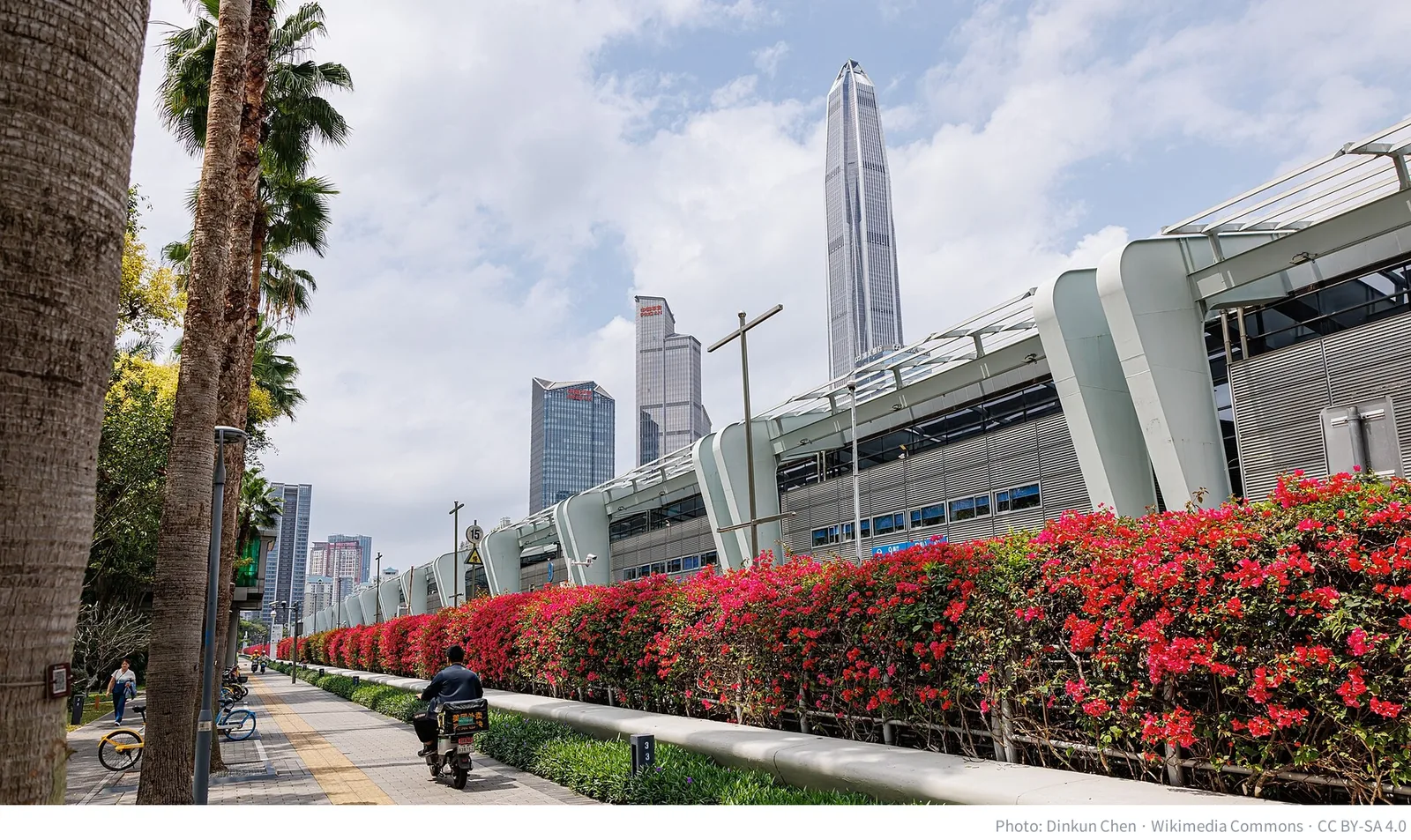
Second deadline: visa-free entry is Korea’s own decision
The Korean government has allowed Chinese tour groups (three or more people) visa-free stays of up to 15 days since September 29, 2025. The original deadline was June 30, 2026, and according to a notice from the Korean Consulate General in Qingdao, the program was extended once, from July 1 to December 31, 2026. The first launch was announced jointly by the Justice Ministry, the Culture Ministry, the Foreign Ministry and the Office for Government Policy Coordination. In July 2025 the Justice Ministry denied reports that it was considering making the program permanent. China’s visa-free entry for Koreans also runs to the end of 2026, and last year China’s Foreign Ministry announced its extension in early November. Because both programs end on the same day, a joint extension could be announced before year-end.
Where the money lands depends on the kind of visitor. Through the third quarter, visitors from greater China rose 29.1% to 7.92 million, but Chinese visitors to GKL’s three casinos fell 8.71% to 307,539 over the same period. The Maeil Shinmun attributed this to China’s capital controls, which shrank the stakes each player brings. Tour-group money goes first to duty-free shops and travel agencies rather than to casinos, which depend on high-stakes players. One report said that a month after the visa-free program began, Chinese visitors to Shinsegae Duty Free’s Myeongdong store rose 90% and its sales 40%. Among listed companies, the ones most directly tied to this decision are Hotel Shilla, a duty-free operator, and Hanatour, which opened a Korea visa application center in Shenyang in October and expanded tours to Harbin and other Chinese cities. Paradise reported third-quarter operating profit of KRW 64.1bn, up 62.3% and above expectations, but the company credited growth in both its casinos and hotels, and those results came separately from the visa-free decision.
China consumer stocks were sold on summit days
China-related consumer stocks have one clear record. On the days Korea–China summits were held, shares that had risen on hopes fell instead. Grouping five cosmetics stocks, six tourism, duty-free and casino stocks, and six entertainment and game stocks and measuring them against the KOSPI, the three groups returned −3.6pp, −4.4pp and −2.5pp on the first trading day after the Gyeongju summit of November 1, 2025, and −4.8pp, −5.7pp and −8.9pp on the day of the Beijing state visit on January 5, 2026. Across four China-related events (the visa-free announcement and launch, and two summits), eight of the 12 group-day results were negative. The only up day was August 6, 2025, when the visa-free program was first announced.

What this record says is about timing. A summit is a day that gathers hopes; the day the money is actually decided is the day a program is announced. What is most likely to be decided in Shenzhen this week is a US–China truce extension, and the real day for tourism is the visa-free extension announcement before year-end. And at home the last table opens right away this week: the National Assembly.
8. National Assembly: in a structure set by a majority and automatic referral, some budgets survive
The domestic table, the National Assembly, has the clearest decision structure. The ruling bloc holds 60% of the seats, and if the budget committee cannot finish its review by November 30, the government’s bill goes automatically to the floor on December 1. Under the constitution the Assembly cannot increase spending without the government’s consent. So the real fight in the subcommittee is over what to cut, and over the past three years the Assembly changed the total by less than 1% of the government’s proposal. Local currency voucher and defense budgets are likely to survive, and the company those vouchers reach most directly relative to its size is KONA I.
Ruling bloc 180 seats, People Power Party 110
After by-elections held with the June 3 local elections, the Democratic Party has 161 seats and the People Power Party 110, and the ruling bloc including the Rebuilding Korea Party and others has 180. Newsis reported that this is enough to fast-track bills and force an end to filibusters in the National Assembly. The budget committee is chaired by Democratic lawmaker Lee Kwang-jae, with Democrat Jung Tae-ho and People Power Party lawmaker Yoo Sang-bum as the party secretaries. The parties are at odds over a special counsel bill on what the Democrats call fabricated prosecutions, and on November 9 the People Power Party members of the judiciary committee declared a boycott of budget reviews.
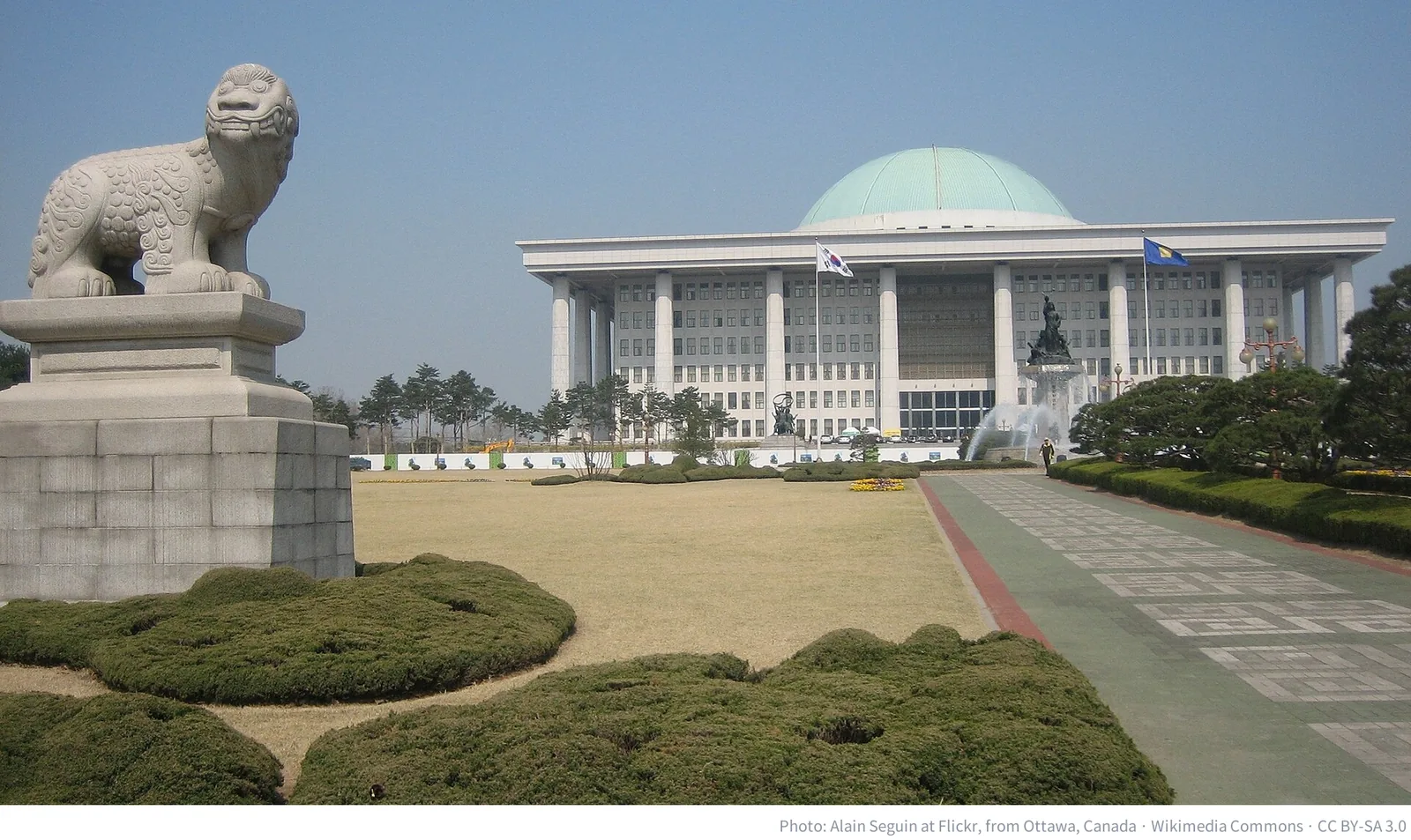
The fights: the Future Response Fund, the chip cluster and the cut list
The government’s bill is KRW 820.9tn, 12.8% more than the 2026 budget. The biggest dispute is a new KRW 162tn Future Response Fund. The People Power Party wants the KRW 104.4tn it would hold in reserve used to repay debt, and wants to shrink the share (30%) the government can change without a vote of the Assembly. The National Assembly Budget Office also proposed lowering that limit to 20% or less. On November 2 the People Power Party said it would cut “at least KRW 30tn” and listed 158 problem programs; among those it named were KRW 1.45tn for local currency vouchers and KRW 1.17tn for a basic income for farming and fishing villages.
The trade and industry committee failed to approve its budget on November 13. According to SBS Biz, over a KRW 1.5tn integrated fiscal support program for a chip cluster in the southwest, the People Power Party demanded a full cut, saying the basis for the amount was unclear, while the Democratic Party demanded KRW 6tn, an increase of KRW 4.5tn. Sending the item straight to the budget committee without a committee vote was also discussed. But under Article 57 of the constitution the Assembly cannot raise spending or create new items without the government’s consent, so a fourfold increase would need the government to agree and an equal cut elsewhere.
The last three years: totals barely moved, and vouchers survived
The Assembly changed the government’s proposals very little. The 2024 budget ended with a net cut of about KRW 300bn, and KRW 300bn for local currency vouchers was newly added. For the 2025 budget, the opposition passed on its own a version that only cut KRW 4.1tn without any increase. For the 2026 budget the parties agreed to cut KRW 4.3tn and add KRW 4.2tn, a net cut of only KRW 100bn, and Newsis reported that “the budgets for the Lee Jae-myung government’s core agenda, including the National Growth Fund and local currency vouchers, were all passed as originally proposed.” It was the first time in five years the legal deadline was met.

This year’s deal is likely to look similar. What the People Power Party can win is a smaller limit on changes to the Future Response Fund, part of its reserve going to repay government bonds, and regional projects and compensation for local grants; what the Democrats want to protect is local currency vouchers, the basic income and the chip special account. Without a deal, the Democrats can use their majority to pass the government bill referred on December 1 or a version reflecting only cuts. Either way, central funding for local currency vouchers stays close to the government’s proposal.
KONA I: central funding, issuance, payments, fees
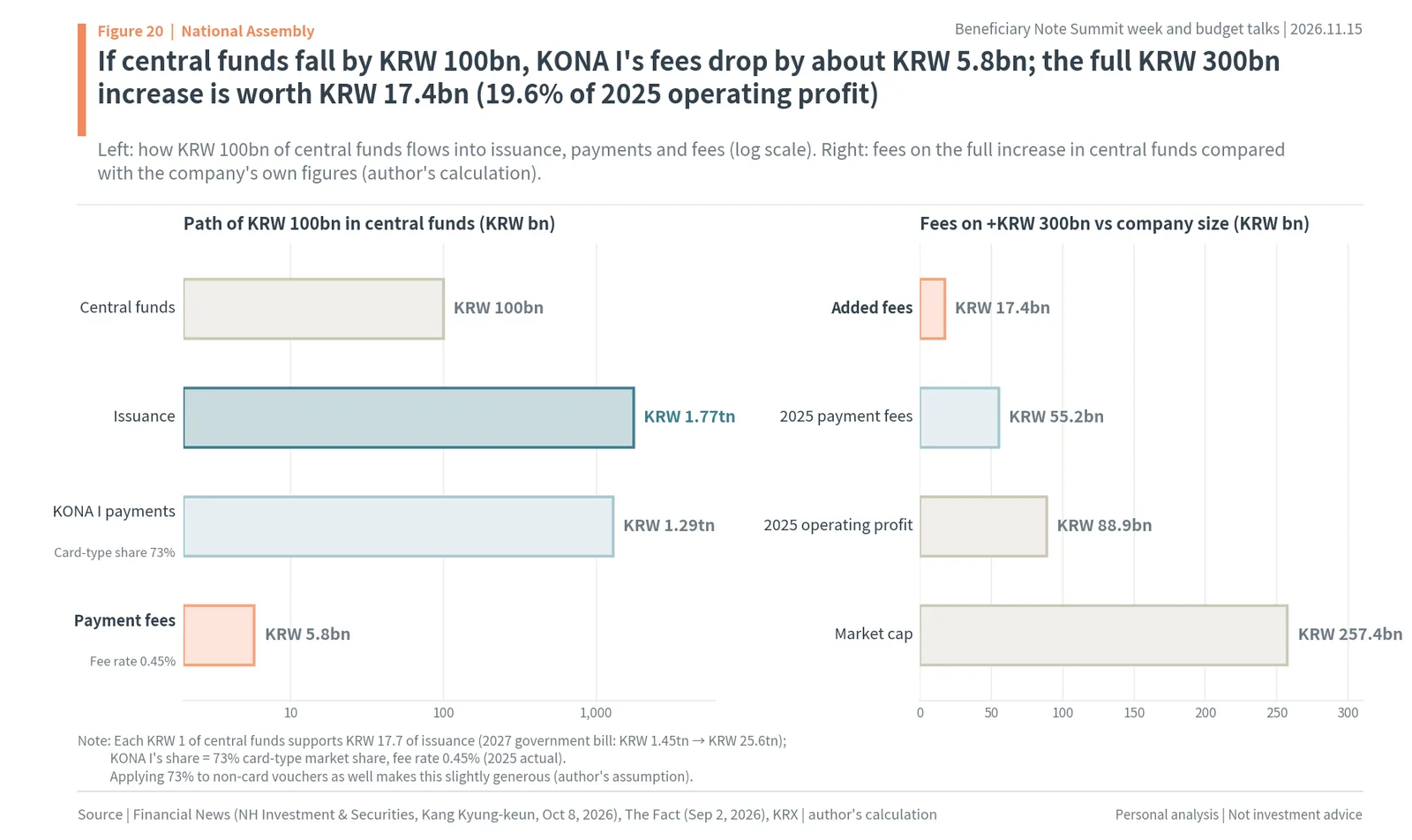
Central government support for issuing local currency vouchers rises from KRW 1.15tn in 2026 to KRW 1.45tn (about $1.09bn) in 2027, an increase of KRW 300bn (26.1%). NH Investment & Securities analyst Kang Kyung-keun wrote that this funding brings issuance to KRW 25.6tn, and that under the government’s master plan it grows to KRW 31.2tn by 2030. KONA I runs 73% of the card-type local currency market, and in 2025 it earned KRW 55.2bn (about $41mn) in payment fees on KRW 12.4tn of local currency payments, a fee rate of about 0.45%. That KRW 55.2bn equals 21.4% of KONA I’s market cap of KRW 257.4bn (about $193mn); its shares closed at KRW 18,070 (about $13.5) on November 13.

Following the money with the author’s assumptions: in the 2027 proposal, each won of central funding becomes 17.7 won of issuance. A KRW 100bn cut in central funding reduces issuance by about KRW 1.77tn, and the fall in payments on KONA I’s share (applying its 73% card-type share) cuts fees by about KRW 5.8bn. For the full KRW 300bn increase, fees come to about KRW 17.4bn (about $13mn), 19.6% of 2025 operating profit of KRW 88.9bn and 6.8% of market cap. Applying 73% even to non-card vouchers makes these numbers a little generous. KONA I’s third-quarter operating profit was KRW 20.4bn, down 32.5%, because of a high base in metal cards; local currency revenue was about the same as a year earlier.
Defense: the side both parties support
The defense budget is KRW 73.28tn, up 8.2%, and defense capability improvement spending is KRW 22.71tn. The budget for KF-21 Boramae production rises from KRW 1.4tn to KRW 3.3tn, and KRW 96.6bn (about $72mn) is included for the first time to start the nuclear-powered submarine program “Jangbogo-N” (KRW 44bn for design, KRW 41.3bn for asset acquisition, KRW 8.6bn for equipment and KRW 1bn for facilities). The Defense Project Promotion Committee approved the program’s basic strategy on November 6, and the National Defense Committee is due to vote on the Defense Acquisition Program Administration’s budget on November 16. The People Power Party’s cut list concentrates on cash handouts and fund programs, so defense has little reason to be cut. The KRW 3.3tn for Boramae production is 32.5% of KAI’s market cap, but it pays for a production contract already signed, so it is not new revenue, and the submarine start-up money is a small 0.7% of Hanwha Ocean’s market cap. What the defense budget offers is less new money than confirmation that work already won stays in place.
In short, the National Assembly works in a structure set by a majority and automatic referral, so local currency vouchers and defense are likely to survive, and the company that money reaches most directly relative to its size is KONA I. Then how did stocks actually move on the days political decisions like these were made before?
9. How stocks moved on the days political decisions were made
Share prices on decision days depended on the kind of decision. When a partner country fixed its purchase method or quantity (Indonesia’s decision to buy finished jets), shares followed strongly; on days of decisions that had been announced in advance, such as summits or budget passage, the reaction was small or even the opposite. Below is how much the three main stocks of this report (Hanwha Ocean, KAI and KONA I) and the trip-related stocks beat or trailed the KOSPI (the KOSDAQ for KONA I) on past decision days. The numbers are excess returns in pp, net of the index move on the same days.
Hanwha Ocean: sanctions lasted a day, suspensions were quiet
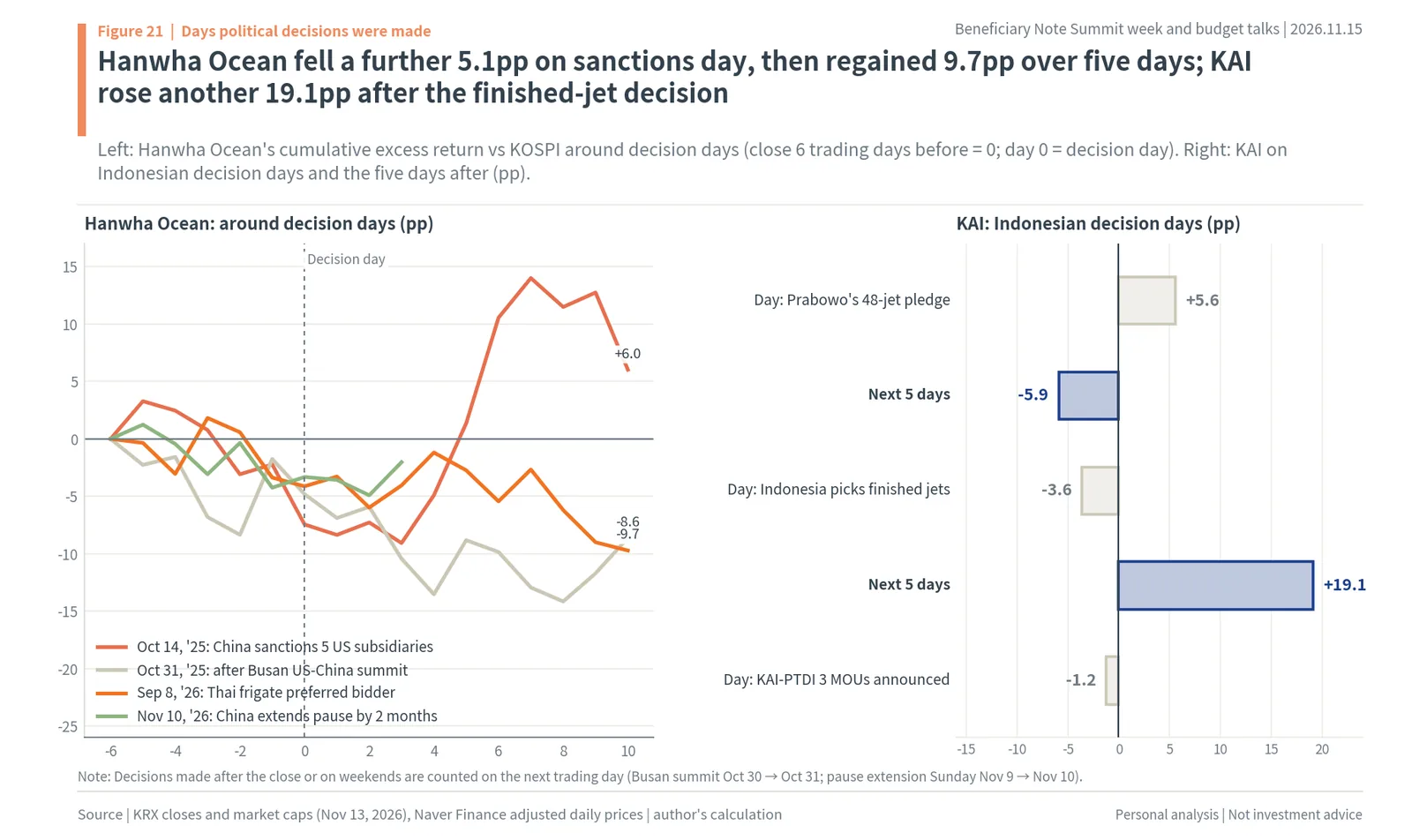
Hanwha Ocean fell 5.1pp more than the KOSPI on October 14, 2025, when China announced sanctions on its five US subsidiaries (a raw move of −5.8% against −0.6% for the KOSPI). But it won back 9.7pp over the next five days. On October 31, the day after the one-year suspension was agreed at the Busan US–China summit, it actually fell 2.9pp; on September 8, 2026, when it was named preferred bidder for the Thai frigate, it moved −0.8pp; and on November 10, the first trading day after China extended the suspension by two months, +1.4pp. The market treated the sanctions as a bargaining chip in US–China talks and absorbed them in a day, and it barely moved on announced good news such as suspensions and preferred-bidder status. What moved Hanwha Ocean’s shares was main-contract filings and the industry cycle more than the news on days like these.
KAI: big moves on the days the partner fixed the method
KAI reacted clearly to Indonesia’s decisions. On April 1, 2026, when President Prabowo visited Korea and pledged 48 jets, it beat the KOSPI by 5.6pp, and by 8.2pp over two days, but it gave back 5.9pp over the next five days. By contrast, on June 30, when Indonesia dropped local production and decided to buy finished jets, it trailed by 3.6pp on the day and then beat the index by 19.1pp over the next five days. The pledge lasted a day, while the decision that changed the purchase method and moved one step toward a contract was priced in for longer. On the day KAI and PTDI announced their memorandums last week, it moved −1.2pp.
Defense and nuclear stocks on trip days: hopes were priced in early
Defense, shipbuilding and nuclear stocks did not move consistently on presidential trip days. On October 7, 2024, when former President Yoon Suk Yeol visited the Philippines (a memorandum on a Bataan nuclear feasibility study), HD Hyundai Heavy trailed the KOSPI by 5.1pp and then gained 6.8pp over five days, while Doosan Enerbility gained 3.4pp on the day. On October 27, 2025, the day of the ASEAN meetings in Kuala Lumpur, Hanwha Ocean (+0.8pp) and HD Hyundai Heavy (+2.5pp) rose a little, but in the five days before they had already gained 21.0pp and 11.6pp, and in the five days after they lost 5.1pp and 7.2pp. On April 22, 2026, the day of the state visit to Vietnam, KEPCO and Doosan Enerbility moved roughly with the index. The state visit to the Philippines on March 3, 2026 was left out: it was the first trading day after the Iran war began on February 28, when defense stocks jumped, so the trip’s effect cannot be measured separately.
KONA I: political events mattered more than budget days
KONA I did not move much on the days main budgets passed. On the day the 2024 budget passed (December 21, 2023) it beat the KOSDAQ by 2.1pp, and on the day the 2026 budget passed with local currency funding as proposed (December 2, 2025), by 1.6pp. On the day the 2025 budget passed (December 10, 2024) it trailed by 5.3pp, but in the five days before it had already gained 89.8pp amid the December 3 martial law and the impeachment crisis. In the ten days after the subcommittee started, it moved −3.6pp in 2023, +3.5pp in 2024 and +4.8pp in 2025, up in two of three years. KONA I’s biggest move came not on a budget day but right after the presidential election (June 4, 2025: +28.5pp on the day and +55.4pp over two days).
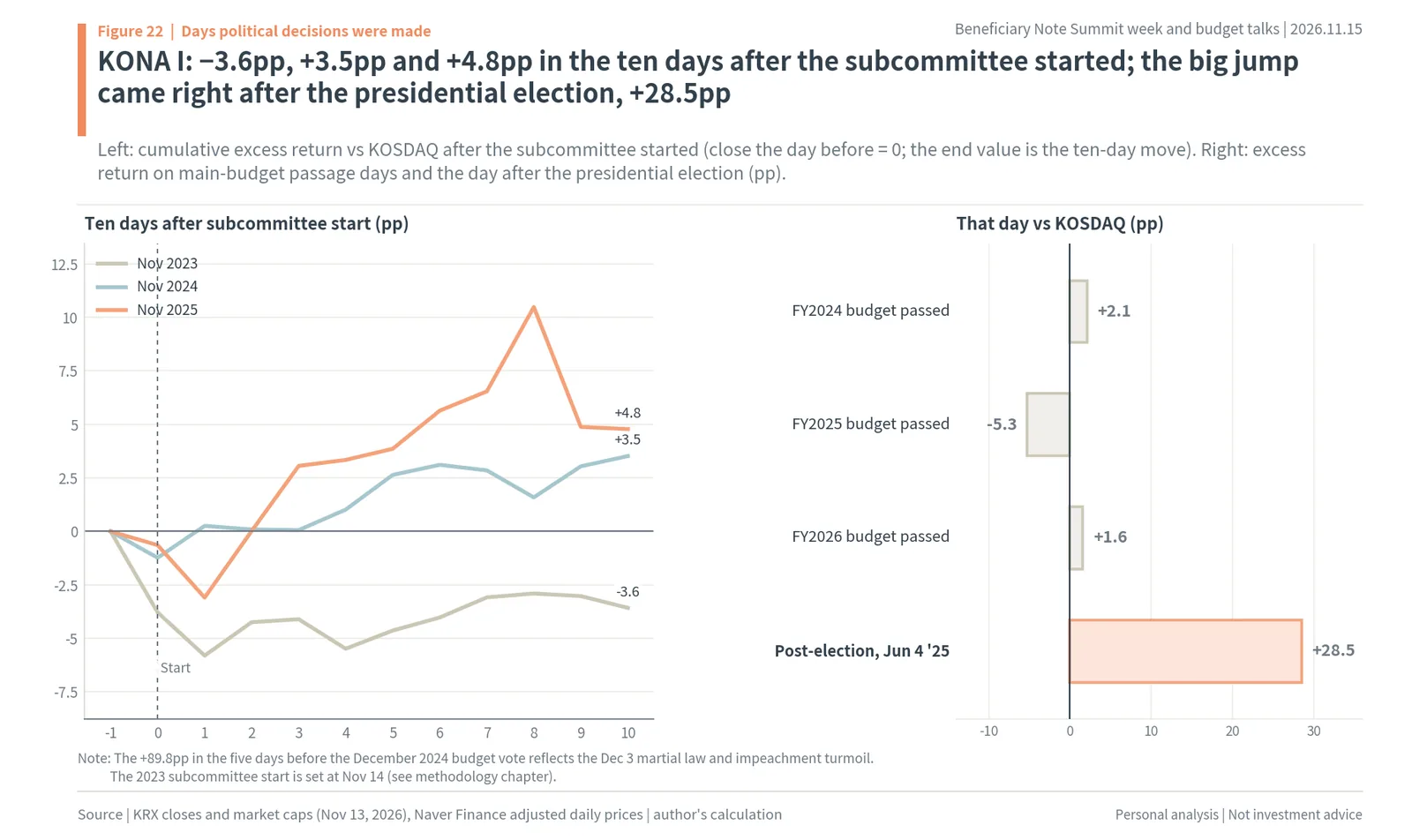
This record says two things. First, the day of an announced decision is usually already in the price, so buying that day was often late or went the wrong way. Second, on days when the partner country actually fixed the purchase method or quantity, shares followed over several days. So the next chapter splits the seven tables’ decisions into those already announced and those not yet made, and ranks the stocks again by how close each decision is.
10. The order of decisions and the money at stake
Putting the seven tables’ decisions side by side by how close they are and how big they are relative to company size sets the order. The nearest are Thailand’s main contract and the Korean budget, where politics is done and only procedure remains. Next come the US–China truce extension and the year-end visa-free announcement. The Philippines, Indonesia and Vietnam are next year’s business, pending the other country’s budget signature, loan approval or Politburo decision. The author’s order of interest is Hanwha Ocean, then KONA I, KAI, Hotel Shilla and Hanatour, HD Hyundai Heavy, and KEPCO and Doosan Enerbility.
Money at stake divided by market cap
Dividing each deal by the company’s market cap (KRX, November 13) gives the following. KAI’s 16 Boramae jets for Indonesia are the largest at 38.1% (114.2% for 48 jets), but the decision is the furthest away. KONA I’s local currency payment fees are 21.4% of its market cap, and that decision comes from the National Assembly between late this month and early next month. Hanwha Ocean’s first Thai frigate looks small at 4.6%, but its decision is the nearest, and with three follow-on ships it reaches 27.0%. Two Philippine submarines would be 10.1–13.5% of Hanwha Ocean’s market cap, but there is not even a request for proposals. HD Hyundai Heavy’s follow-on Philippine warships, sized like the last contract, are 3.0%. Vietnam’s second Ninh Thuan reactor is over KRW 13tn but would be shared by several companies.

How far they have already fallen
Most of the stocks tied to this week’s decisions have fallen hard. At November 13 closes, against their 52-week highs, Hanwha Ocean is down 67.7%, Doosan Enerbility 65.7%, HD Hyundai Heavy 63.6%, KONA I 62.0%, KEPCO 59.3%, Hotel Shilla 49.6%, KAI 48.4% and Hanatour 40.5%. Over three months, the stocks that fell more than the KOSPI (down about 24%) were Hanwha Ocean (−25.3pp excess), HD Hyundai Heavy (−22.7pp), Doosan Enerbility (−19.1pp) and KONA I (−13.3pp). These falls came from a market-wide crash and sector trends unrelated to this week’s political calendar. So for the stocks whose decisions are confirmed this week, the confirmation arrives while little of it is priced in.

Stock by stock
Hanwha Ocean is the only stock tied to three tables. The Thai navy’s main contract signature (the nearest), the US Trade Representative’s and China’s Commerce Ministry’s suspension extensions (January 9–10) and the National Assembly’s submarine start-up funding (the defense committee on November 16) all reach this company. Its P/E is 8.5x on 2027 consensus earnings per share of KRW 5,663.
KONA I is tied only to the National Assembly, but its decision structure is the clearest. If a majority and automatic referral keep central funding for local currency vouchers near the government’s proposal, payment fees alone worth more than 20% of its market cap continue next year. Its third-quarter results fell on a high base in metal cards, but local currency revenue was about the same as a year earlier. Its P/E is 4.1x on 2027 consensus EPS of KRW 4,385, the lowest of the three main stocks. Although money set by policy is one pillar of its revenue, the market prices the company as if the voucher budget could be shaken.
KAI has the most money at stake and the longest wait. Indonesia’s main contract comes after a new vice-president is chosen and the finance ministry approves the loan, and the Philippine fighter program after the Philippine budget. The domestic Boramae production budget is likely to hold with support from both parties. Its P/E is 25.3x on 2027 consensus EPS of KRW 4,119, the most expensive of the three. That means the market already prices in part of the Boramae exports, so the next step up needs confirmed news such as Indonesia’s loan approval.
For Hotel Shilla and Hanatour, the real day is not this week’s summit but the visa-free extension announcement before year-end. Given that China consumer stocks fell on summit days, waiting for the program announcement fits the record better than buying on summit hopes. HD Hyundai Heavy has a negotiated-contract road open once the Philippine Congress signs its budget, and KEPCO and Doosan Enerbility wait for the Vietnamese Politburo.
Read in this order, the dates to check this week also fall into place.
11. Situations and dates
Instead of buy prices or target prices, this chapter sets out the situations and dates when political decisions actually arrive. A situation in which buying fits the record is the day the other side’s decision is confirmed on paper; a situation to wait is when summits and hopes come first; a situation to avoid is chasing shares on the day of an announced decision.
This week
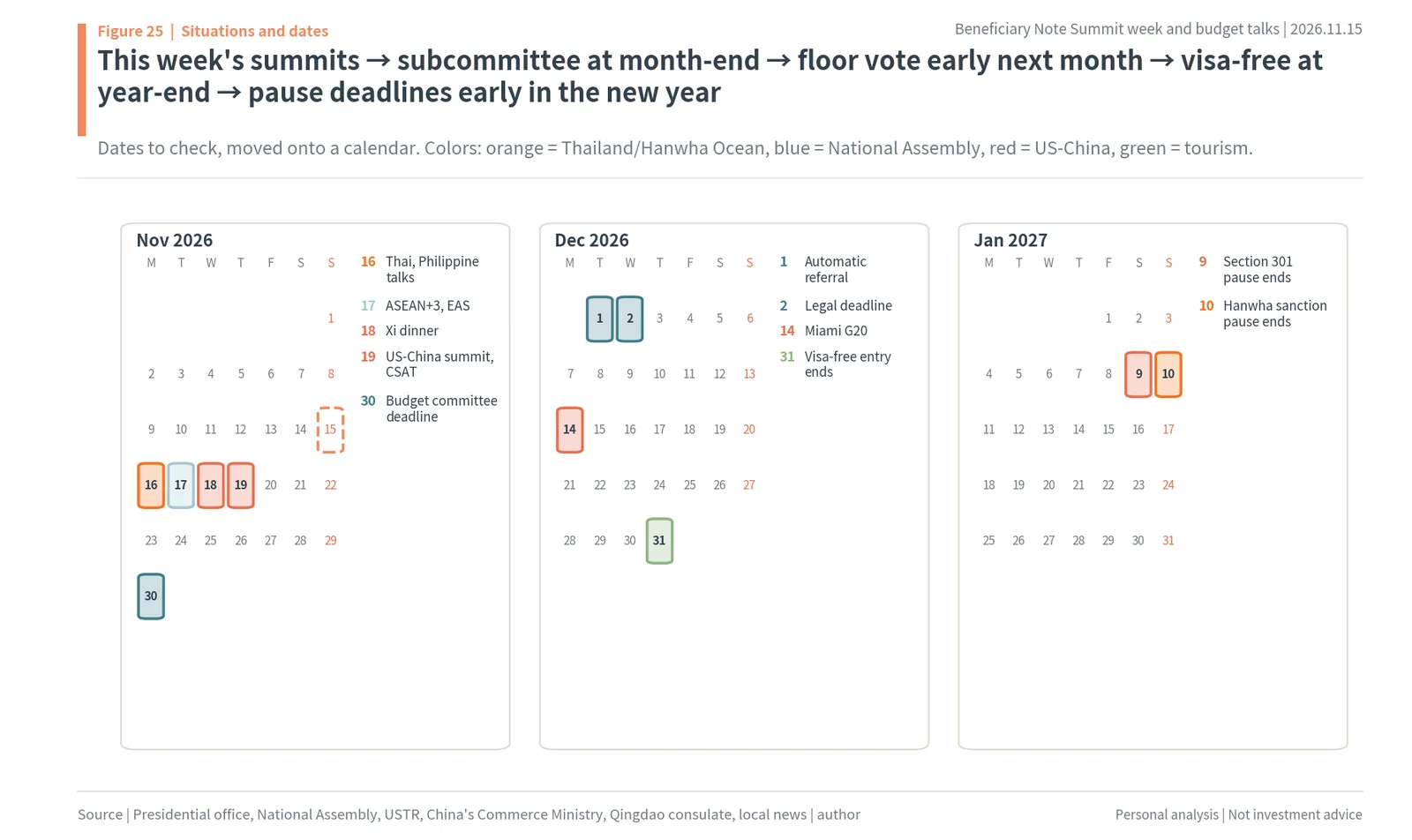
On Monday afternoon (November 16), after the Thai and Philippine summits in Manila, watch whether the presidential office mentions the frigate main contract schedule or the Philippine follow-on warship and fighter programs. If Hanwha Ocean files the Thai main contract, the first of the seven stamps is down. The same day, the National Defense Committee is due to vote on the Defense Acquisition Program Administration’s budget (including the submarine start-up funding), and the budget subcommittee begins, so the cut list starts to emerge.
On Tuesday (November 17) come ASEAN Plus Three and the East Asia Summit, and on Wednesday (November 18) the APEC CEO Summit in Shenzhen and the welcome dinner hosted by President Xi and his wife. Watch whether a Korea–China summit happens and, if so, whether visa-free entry and cultural exchange are mentioned. On the last two summit days, China consumer stocks fell.
On Thursday (November 19) come the APEC plenary, the Trump–Xi meeting and a US–China–Russia trilateral. Watch whether the truce is extended beyond January 10 and whether a permanent suspension or withdrawal of the Section 301 shipbuilding measures is mentioned. The same day, the Korean stock market opens an hour late because of the college entrance exam.
Year-end and early 2027
When the subcommittee finishes in late November, it will be clear whether the voucher and defense budgets were cut. If the budget committee has not finished by November 30, the government’s bill is referred automatically to the floor on December 1, and the legal deadline is December 2. In the same month, the Philippine Senate takes the 2027 budget through its third reading and the bicameral conference to the president’s signature. Whether military modernization rises toward PHP 70bn sets the timetable for HD Hyundai Heavy’s and KAI’s Philippine programs.
Before year-end, extensions must be announced for Korea’s visa-free entry for Chinese tour groups (expiring December 31) and China’s visa-free entry for Koreans (through the end of 2026). Last year China announced its extension in early November. Trump and Xi meet again at the G20 in Miami on December 14–15, and on January 9 (US) and January 10 (China), 2027 the suspensions of the Section 301 shipbuilding measures and of the Hanwha Ocean subsidiary sanctions end together. Indonesia must choose a new vice-president by early January.
Situations at a glance
Situations in which buying fits the record are moments of confirmation on paper: Hanwha Ocean’s filing of the Thai main contract, the day the National Assembly’s floor vote fixes voucher funding near the government’s proposal, and the day a visa-free extension or permanent program is announced. Situations to wait are weeks like this one, when summits and trip schedules come first. Situations to avoid are chasing China consumer stocks that rose on summit hopes, and buying the Indonesian and Vietnamese deals, whose main-contract procedures are still ahead, on this week’s news.
To restate the argument of this report: the money comes not from the official agenda but from the last stamp of the other side’s politics, and the nearest stamps are in Thailand and in Korea’s National Assembly.
12. Calculation notes
This chapter explains where the report’s numbers come from and how they were calculated. Sourced numbers were checked in the original government and parliament releases and press reports, and the author’s calculations follow the rules below.
Share prices and market caps use KRX regular-session closes and listed shares on Friday, November 13, 2026 (stockkit fetch). Naver Finance daily closes can include trades on Nextrade, Korea’s alternative trading venue, so they were not used as reference prices. Three-month and one-month changes and distance from 52-week highs use KRX daily prices, and excess returns over three months subtract the index change in the KRX snapshot.
Event studies use Naver Finance adjusted daily closes: the stock’s change from the close before the event day to the event-day close, minus the KOSPI’s change (the KOSDAQ’s for KONA I) over the same period. The five days before run from the close six days before the event to the close the day before, and the five days after from the event-day close to the close five days later. Decisions announced after the close or on weekends use the next trading day as the event day (the Busan US–China summit of October 30, 2025 becomes October 31; the Gyeongju Korea–China summit on Saturday, November 1, 2025 becomes November 3; China’s sanctions suspension extension on Sunday, November 9, 2026 becomes November 10). The China consumer groups are simple averages of cosmetics (Amorepacific, Cosmax, Kolmar Korea, Hankook Cosmetics, APR), tourism, duty-free and casinos (Hotel Shilla, Paradise, GKL, Lotte Tour Development, Hanatour, Yellow Balloon Tour) and entertainment and games (HYBE, JYP Entertainment, SM Entertainment, Studio Dragon, CJ ENM, NCSoft). The subcommittee start dates are November 17, 2025, November 18, 2024 (reported), and November 14 for 2023, based on a November 20 report that it “started last week” and a November 16 report of its review. The March 3, 2026 state visit to the Philippines was left out because it fell on the first trading day of the Iran war.
For deal size divided by market cap, the Thai frigate uses the won amount reported by Dealsite (KRW 683.3bn at the exchange rate at selection); at the November 13 rate (KRW 39.37 per baht) it is KRW 658.7bn (4.4%). Indonesia’s 16 Boramae jets are the reported $2.9bn times the November 13 rate of KRW 1,333.78 per dollar, or KRW 3.87tn (September reports converted it to KRW 4.01tn). The Philippine follow-on warships assume the same size as HD Hyundai Heavy’s December 2025 contract for two ships, KRW 844.7bn (author’s assumption). Vietnam’s second reactor uses the low end of reported costs, KRW 13tn.
KONA I’s money path is the author’s calculation. From the 2027 proposal’s central funding of KRW 1.45tn and issuance of KRW 25.6tn (NH Investment & Securities), each won of central funding becomes 17.7 won of issuance; KONA I’s share uses its 73% share of card-type vouchers, and the fee rate uses 0.45% from 2025 results (KRW 12.4tn of payments, KRW 55.2bn of fees). Applying 73% even to non-card vouchers makes the numbers a little more generous than reality. Operating profit of KRW 88.9bn is the 2025 result (WISEreport).
P/E ratios use 2027 consensus earnings per share from WISEreport’s annual consensus (stockkit fetch, downloaded November 13): Hanwha Ocean KRW 5,663, KAI KRW 4,119 and KONA I KRW 4,385. Dollar figures use KRW 1,333.78 per dollar. Likelihood and order are the author’s judgment, based on the steps already finished and still pending at each table and on the other side’s calendar.
Korea summit week and budget stocks: quick answers
Q. Will arms contracts be signed at this week’s summits?
No contract has been announced for signing at the summits, and the presidential office has not announced memorandums or joint statements. Defense deals usually confirm intent at a summit and are signed separately between the other country’s defense ministry and the company. Thailand’s frigate has already passed the prime minister’s signature and the defense ministry’s approval; what remains is the contract between the Thai navy and Hanwha Ocean, which the company will disclose in a filing.
Q. Does a bigger chip cluster budget help builders in southwest Korea?
The KRW 1.5tn for the southwest chip cluster goes into an integrated fiscal support fund for site infrastructure, tenant support and training, with Korea Land and Housing Corporation as developer and no contractor chosen. Kumho E&C hit its daily limit on November 13, but Korean media attributed that to its third-quarter results. Under Article 57 of the constitution the Assembly cannot quadruple the item without the government’s consent, so it is likely to end near the proposal.
Q. If China lifts its informal ban on Korean culture, won’t entertainment stocks move first?
China has not formally lifted it in 2026. The January Beijing summit only agreed to expand cultural exchange gradually, and some K-pop fan meetings in China were cancelled afterward. On the day of that summit, entertainment and game stocks trailed the KOSPI by 8.9pp. Money reaches entertainment companies only when Chinese authorities approve large concerts.
Q. Why are casinos ranked behind duty-free and travel?
Through the third quarter, visitors from greater China rose 29.1% while Chinese visitors to GKL’s casinos fell 8.71%, because China’s capital controls shrank the stakes each player brings. Tour-group money goes first to duty-free shops and travel agencies such as Hotel Shilla and Hanatour. Lotte Tour Development’s Jeju casino depends more on Jeju’s separate visa-free rules and direct flights.
Q. Why are nuclear stocks last in the order?
The Philippine regulator for the Bataan site lacks its implementing rules and senior staff, and the government’s options are still open. Vietnam’s Ninh Thuan 2 needs a Politburo decision and financing terms. Neither will be decided this week, and the money would be shared by several companies, so no single stock’s share is set yet.
Sources
- Kyunghyang Shinmun, presidential trip schedule and bilateral summits (https://www.khan.co.kr/article/202611120939001/, https://www.khan.co.kr/article/202611130937011/), Nov 12–13, 2026; Financial News, briefing by National Security Adviser Wi Sung-lac (link), Nov 12, 2026; Newspim (link), Nov 14, 2026
- Seoul Shinmun, China extends suspension of sanctions on five Hanwha Ocean US units by two months (link), Nov 9, 2026; China Ministry of Commerce Order No. 7 of 2025 (Xinhua), Nov 10, 2025; The Star (SCMP), US–China agenda before APEC (link), Nov 14, 2026
- Thailand: Al Jazeera, election result (link), Feb 9, 2026; Nation Thailand, 16-party coalition (link), Mar 19, 2026; Khaosod English, navy picks Hanwha Ocean (link), Sep 18, 2026; The Guru (CIWS hearing), Sep 11, 2026; Dealsite, Sep 15, 2026
- Philippines: Gulf News, vice-presidential impeachment (link), Oct 13, 2026; Daily Tribune, Supreme Court ruling on budget laws (link), Oct 21, 2026; Philstar, House passes budget (link), Oct 13, 2026; Journal News, military modernization fund (link); Manila Times, HD Hyundai Heavy order outlook, Aug 9, 2026
- Indonesia: NST (Reuters), vice-president resigns (link), Nov 11, 2026; Jakarta Post, approval rating (link), Oct 19, 2026, and finance minister change, Sep 14, 2026; The Aviationist, finished-jet purchase (link), Jun 30, 2026; Asia Business Daily, KAI–PTDI memorandums (link), Nov 13, 2026; Financial News, Sep 21, 2026
- Vietnam: Vietnamnet, To Lam elected state president (link), Apr 7, 2026; Hankook Ilbo, Ninh Thuan project split (link), Aug 25, 2026; Financial News, competition for Ninh Thuan unit 2 (link), Sep 13, 2026
- United States: OPB (NPR), midterm elections (link), Nov 4, 2026; Holland & Knight, USTR extends Section 301 maritime suspension (link), Nov 9, 2026; Covington, tariffs after the IEEPA ruling, Feb 2026
- China and tourism: National Bureau of Statistics, third-quarter GDP (link), Oct 21, 2026; Consulate General of Korea in Qingdao, extension of visa-free entry for Chinese tour groups (link), Jun 23, 2026; Asia Business Daily, GKL visitors (link), Nov 12, 2026; Maeil Shinmun, casino stocks and China’s capital controls, Oct 20, 2026
- National Assembly: Newsis, seats after by-elections (link), Jun 4, 2026; Financial News, subcommittee schedule (link), Nov 10, 2026; SBS Biz, trade committee and the chip cluster (link), Nov 13, 2026; The Fact, local currency voucher budget (link), Sep 2, 2026; Financial News (NH Investment & Securities, Kang Kyung-keun), KONA I (link), Oct 8, 2026; Newsis, 2026 budget passed (link), Dec 3, 2025
- Also: Seoul Shinmun and The Star (SCMP) on export-control suspensions; Semafor and CGTN on China’s growth and prices; Newspim on the third Trump–Xi meeting; Caixin on the dual-use export ban on Japan; Money Today and Munhwa Ilbo on Hanatour; Newsis on Paradise’s third quarter; Fulcrum and The Star on Thailand’s defense budget; Khaleej Times on the Philippine impeachment schedule; DS Investment & Securities on Philippine arms imports (Aug 18, 2026); Metro Shinmun and Jeonbuk Ilbo on subcommittee start dates; Herald Economy and News Tomato on submarine start-up funding; Financial News on the defense budget
- KRX closes and market caps on Nov 13, 2026 (stockkit); Naver Finance adjusted daily prices and consensus; Yahoo Finance exchange rates; author’s calculations
- Photos: Oleg Yunakov (CC BY-SA 4.0), Japan Maritime Self-Defense Force (CC BY 4.0), Philippine Navy (public domain), Architect of the Capitol and O.J. (public domain), Dinkun Chen (CC BY-SA 4.0), Alain Seguin (CC BY-SA 3.0), Hanwha Ocean and KAI logos (public domain), via Wikimedia Commons; KONA I logo: company website CI (link)
Disclaimer
This report records the author’s personal analysis and views based on public information and does not recommend any particular product or company. It does not recommend buying or selling any financial investment product and is not an investment advisory or quasi-investment advisory service.
Author’s interests: none (the author does not hold any stock mentioned in this report)
Responsibility for decisions and their outcomes lies with the reader.
As of: November 15, 2026
Was this note useful?
Thanks. Your answer helps decide what to cover next.
Korea market snapshot · Nov 27, 2026
New to Korean stocks? Start here for the basics.
Most read this week
5Bank of Korea Holds Rate at 3.00%: Why a 0.12pp Real Rate Points to a November Hike (2026)
Get the Saturday note on Korean stocks
One email every Saturday with the week’s new research on Korean listed companies and links to the updated data pages. Built from DART filings and KRX data. Free; unsubscribe in one click. See past issues